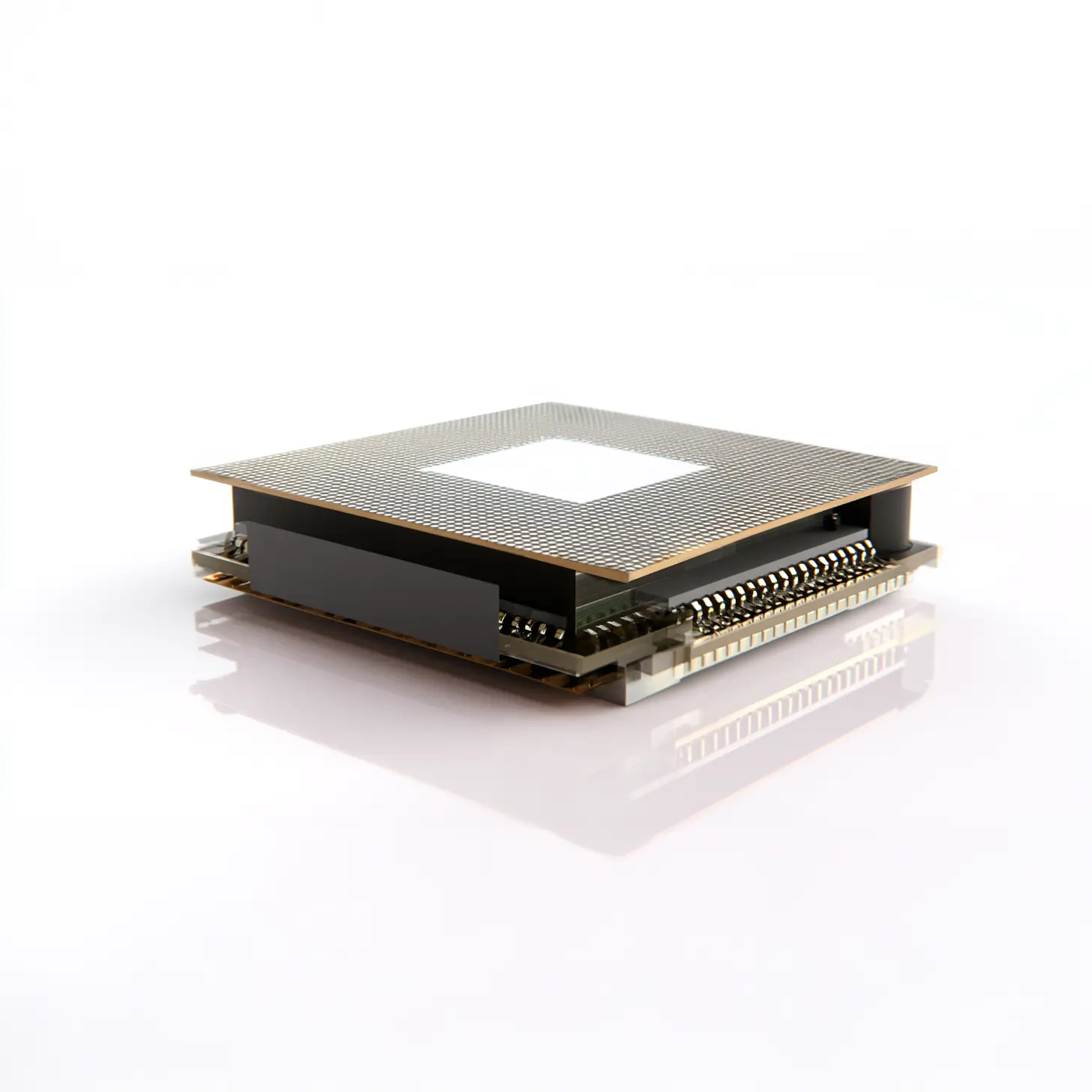
End-to-End Custom Sensor Architecture Design (SPAD/CMOS/ROIC)
We design complete, application-specific imaging sensor architectures—from photon detection through readout and system integration. Our work spans SPAD arrays, CMOS image sensors, and custom ROIC design, optimized for performance, scalability, and manufacturability across demanding scientific, industrial, and defense use cases.
About This Service?
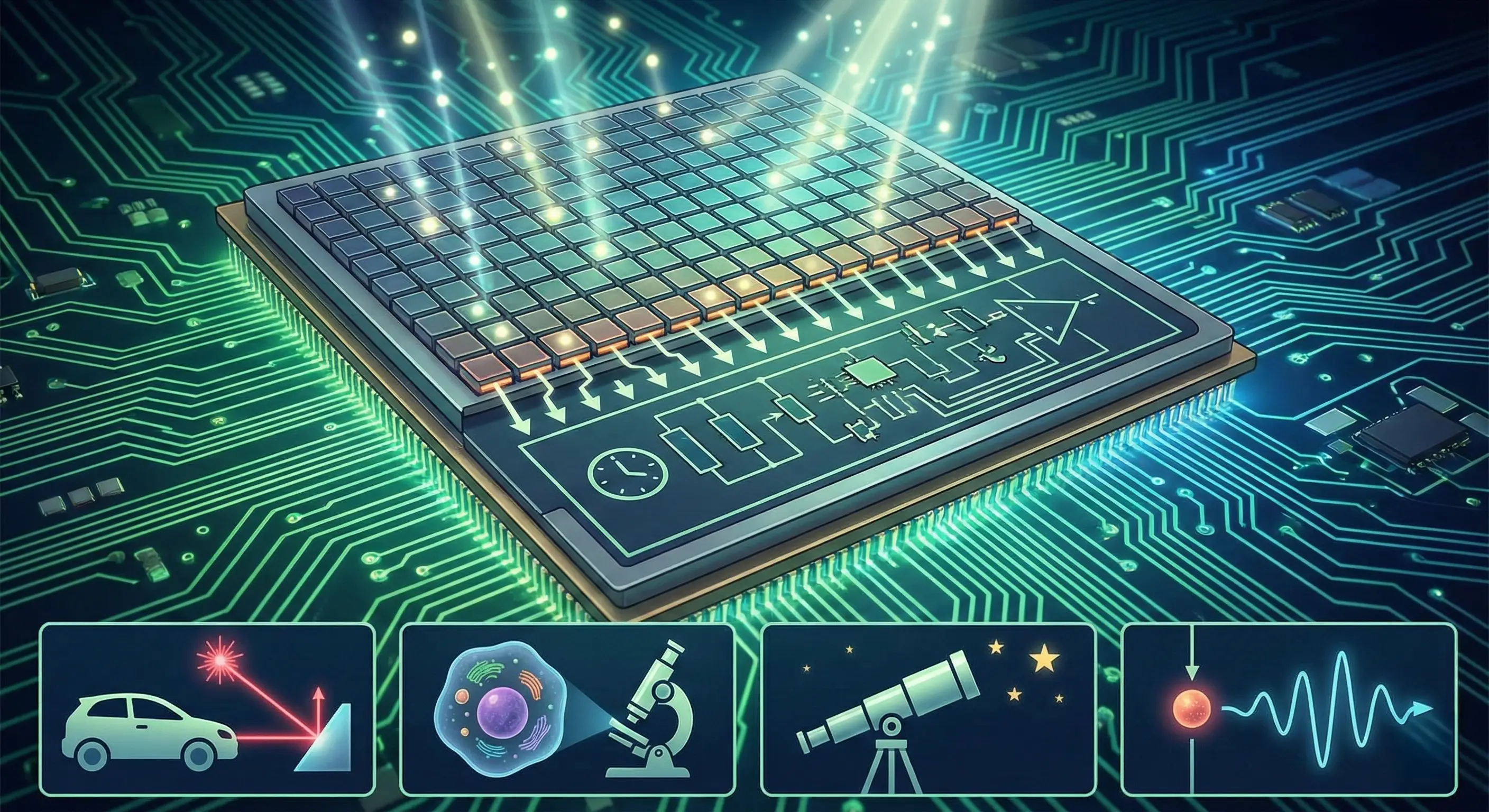
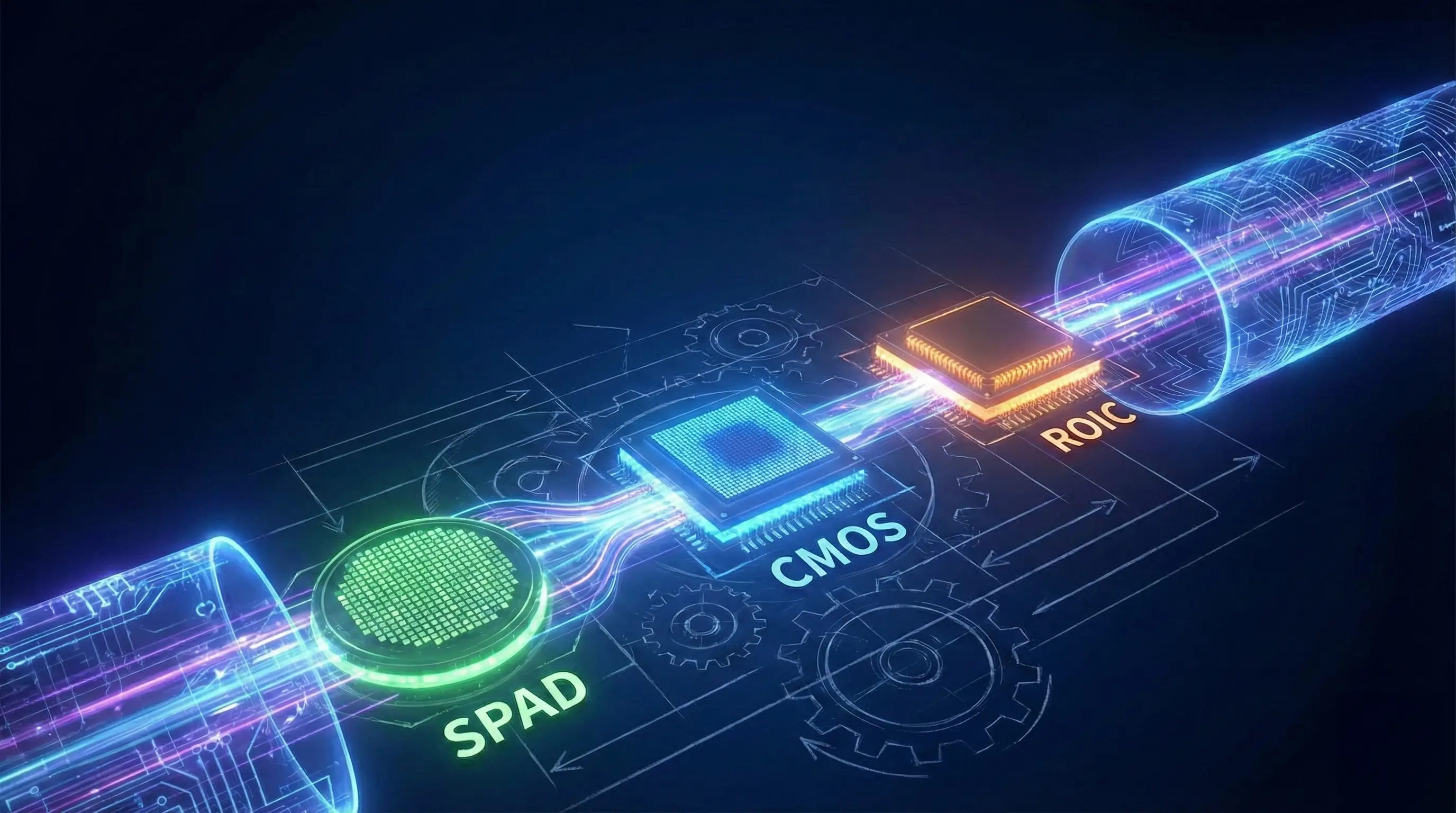
SWIRLabs delivers full-stack sensor architecture design for next-generation imaging systems, engineered from the photon level up. We specialize in tightly integrated SPAD, CMOS, and ROIC architectures that push the limits of sensitivity, timing precision, and signal integrity—while remaining practical to manufacture and scale.
Our approach begins with a deep understanding of the application: photon flux, wavelength range, temporal resolution, noise tolerance, power constraints, and system-level integration requirements. From there, we architect sensors holistically, ensuring that detector physics, pixel design, readout electronics, and downstream processing operate as a unified system—not disconnected blocks.
What We Design
SPAD & Photon-Counting Architectures
We design SPAD arrays optimized for low dark count rate, high fill factor, precise timing, and scalable array geometries. Architectures support time-of-flight, lifetime imaging, low-light detection, and single-photon counting applications, with careful attention to crosstalk mitigation and quenching strategies.
CMOS Image Sensor Design
Our CMOS architectures balance noise performance, dynamic range, readout speed, and power efficiency. We design custom pixel architectures, analog front ends, and column-level circuitry tuned to the specific imaging modality—whether ultra-low light, high-speed capture, or hybrid SPAD-CMOS systems.
ROIC (Readout Integrated Circuit) Design
We develop custom ROIC architectures that translate raw photon events into usable, high-fidelity data. This includes event-driven readout, high-speed ADC integration, timing circuitry, on-chip binning or aggregation, and interfaces designed to minimize bottlenecks at the system level.
System-Level Integration
Beyond individual components, we focus on end-to-end coherence:
- Detector ↔ ROIC co-design to reduce noise and latency
- Power, thermal, and signal-integrity considerations from the start
- Architectures aligned with packaging, fabrication, and test realities
- Clear paths from prototype to production-scale manufacturing
Use Cases
Our sensor architectures support a wide range of advanced imaging applications, including:
- Scientific and biomedical imaging
- Machine vision and robotics
- Aerospace and remote sensing
- Defense, security, and intelligence systems
- Emerging photon-counting and computational imaging platforms
Why SWIRLabs
We bridge physics, circuit design, and system engineering—allowing us to design sensors that are not only cutting-edge, but deployable. The result is imaging hardware that captures more information per photon, per frame, and per watt—ready for real-world environments and long-term scalability.